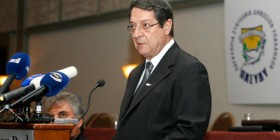
In what has been deemed as a last minute deal, Cyprus leaders have reached an agreement with the European Union for a 10 billion euro bailout. Officials say the deal was reached after pressure mounted from a German-led bloc threatening to cease all temporary funding if a deal was not reached.
With an economy largely based on banking, the bailout will consist of shutting down the country’s largest bank, The Popular Bank of Cyprus, also known as Laiki. The shutdown will cause thousands of jobs to be lost and a very uncertain economic future. Bloomberg reported earlier today -
The squeezed banking industry will likely lead to a “sharp drop” in Cyprus’s gross domestic product this year and next, according to Reinhard Cluse, a London-based economist at UBS AG. As a result, the euro group’s debt-to-GDP ratio target of 100 percent by 2020 “must be doubted,” he said.
The Cypriot Finance Ministry said in a January presentation that bailing out the country may push debt to a peak of about 140 percent of GDP next year.
The specifics of the deal are as follows.
Laiki depositors with 100,000 euros or less will have there money transferred to another bank, Bank of Cyprus. Depositors with over 100,000 euros will have their accounts frozen and used in an effort to resolve Laiki’s debt. Government officials say anywhere between 30 and 40% could be taken.
In an additional effort to limit bank runs, banks have imposed an ATM withdrawal limit, some of 120 euros, others of 100. Also, Cyprus border officials have been ordered to confiscate any funds of any traveler leaving with over 10,000 euros.
Russian officials shared mixed feelings about the decision. With an estimated $31 billion in holdings in Cypriot banks, Russians stand to lose a great deal of money. Human Events reports -
Russia, whose citizens have a huge amount of money in Cypriot banks, is hopping mad about the new deal. Prime Minister Dmitry Medvedev snarled, “In my view, the stealing of what has already been stolen continues.” The Telegraph reports that the Kremlin plans to freeze German assets in Russia in retaliation. Germany is seen by both Russians and Cypriots as the driving force behind the bailout deal.
German Chancellor Angela Merkel expressed her pleasure with the agreement and noted that those who contributed to the crisis are now required to pay towards its resolution.